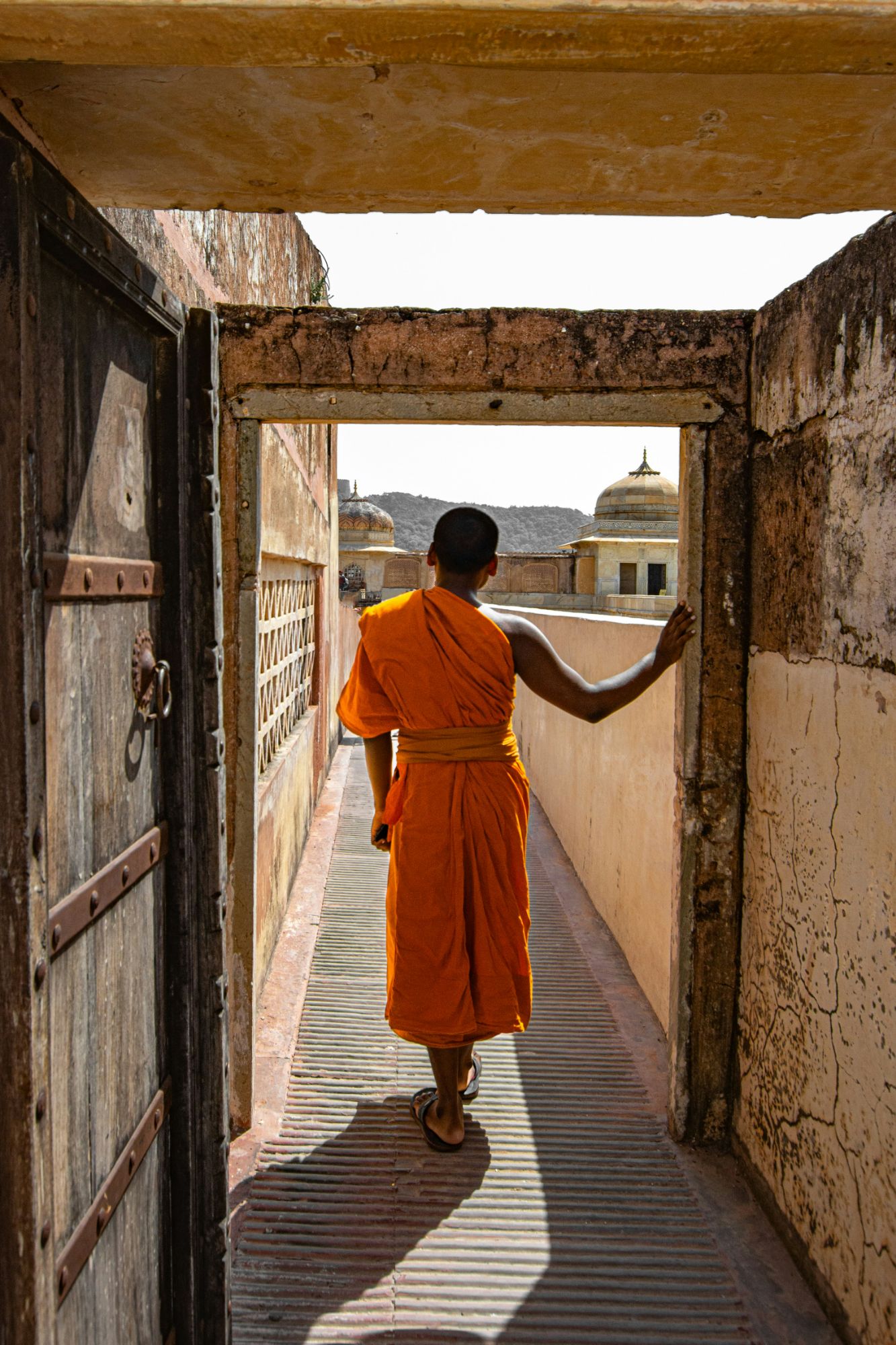
“Who is the biggest obstacle in meditation?

The mind itself.”
It’s the same mind that draws us toward meditation, and it’s also the first to distract us.
Do You Experience This?
The moment you close your eyes, thoughts start racing?
Old fears or regrets suddenly appear?
You sit for 5 minutes and find 10 minutes of restlessness?
If yes, you’re not alone.
This is the common experience of every seeker who sincerely sits to go within.
Why Does the Mind Wander?
1. It’s the Nature of the Mind to Move
The energy of the mind constantly jumps from one thought to another – like a monkey swinging from tree to tree.
2. Hidden Thoughts Begin to Surface
As soon as we sit in silence, suppressed subconscious thoughts rise to the surface.
We try to push them away, but they are trying to leave.
It’s like washing your face – the dirt first becomes visible.
3. Unsteady Breath and Physical Discomfort
If your breath is irregular or your body is tense, the mind cannot calm down.
Breath and mind are deeply connected – like a river and its current.
What Does Science Say?
Yes, neuroscience supports this:
During meditation, the brain shifts from Beta waves (active thinking) to Alpha and eventually Theta waves (deep relaxation).
But when the mind is restless, this shift doesn’t happen.
True meditation begins when brain waves slow down and become gentle — that’s when peace arises.
So, What’s the Solution? Can We Stop the Mind?
❌ Truth #1:
Meditation is not about stopping the mind.
✅ Real solution:
Learn to watch the mind, not fight it.
1. Anchor Your Attention to the Breath
You can’t control the mind directly, but you can control your breath.
Gentle, deep breathing naturally brings stability to the mind.
2. Let Thoughts Come – Just Don’t Follow Them
Observe thoughts like trains passing a platform.
You’re the watcher on the platform – not the passenger on the train.
3. Use a Mantra or Inner Sound
A mantra or a soft inner sound helps the mind stay centered and reduces drift.
4. Start with Guided Meditation
For beginners, guided meditation is the most effective and effortless way to build inner focus.
From My Experience…
When I first tried meditating, I felt I was doing nothing “right.”
But over time, I simply stayed with the breath and stopped resisting thoughts.
Soon, a quiet clarity began to emerge.
Meditation is not a goal – it’s the art of letting go.
✅ Ready to Begin Your Inner Journey?
I’ve created a 4-month Guided Meditation Course,
where we explore the mind, breath, chakras, stillness, and inner witness – one step at a time.
Talk to me on WhatsApp 9315835440
Final Thought:
Watching the mind – without fighting it – is the true beginning of meditation.
The mind may wander today – it may settle tomorrow –
and one day, it will become your companion.
All it takes is one courageous step… inward.